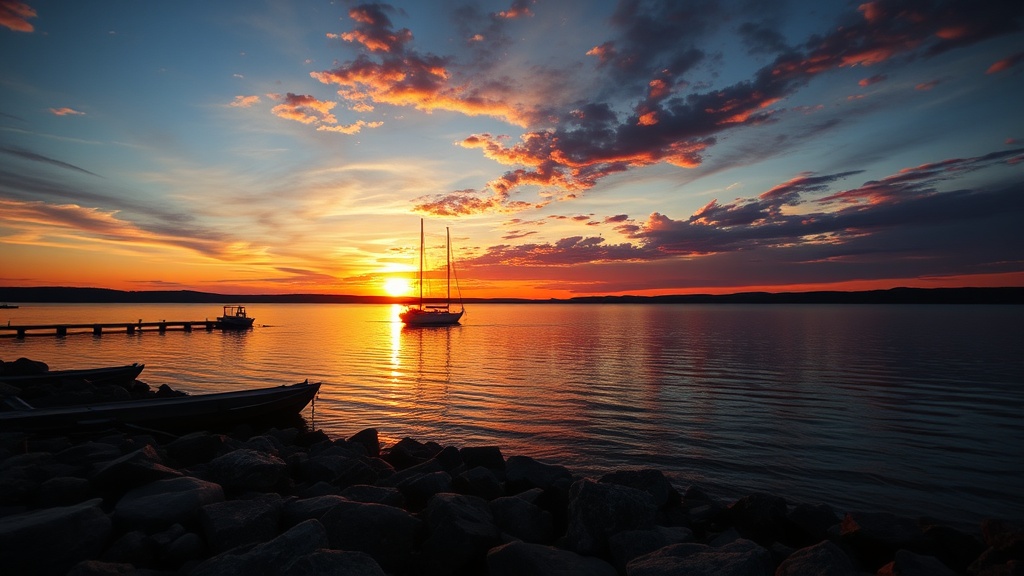
Finding the Best Sunset Spots Along the St. Lawrence

Where can you find the most unobstructed views of the sun hitting the water as it dips below the horizon in the Thousand Islands? This guide identifies the top locations along the St. Lawrence River for watching sunsets, ranging from public parks to private boat moorings. You'll find specific directions for both land-based viewing and water-based perspectives to ensure you don't miss the best light of the day.
Where are the best sunset viewpoints in the Thousand Islands?
The best sunset viewpoints are located on the western edges of the major islands or on the western banks of the St. Lawrence River, such as Gananoque or Rockport. Because the sun sets in the west, you need a clear line of sight toward the western horizon, unobstructed by high cliffs or dense forest. If you're on a boat, being in the middle of the channel provides the most dramatic colors.
For a reliable, land-based view, the 1000 Islands Parkway is your best bet. This scenic route offers several pull-offs that look directly out over the water. I personally love the way the light hits the granite shorelines here. It's a completely different vibe than being stuck on a crowded sidewalk in a city.
If you prefer a more secluded feel, look toward the Thousand Islands National Park. You can find several hiking trails that lead to elevated points. Just remember that park hours apply, so don't plan a sunset hike if the gates are closing soon (check the Parks Canada official website for seasonal hours and regulations).
Top Locations by Viewing Style
Not every sunset experience is the same. Depending on whether you're a hiker, a boater, or a casual driver, your "best" spot will change.
| Viewing Style | Recommended Spot | Best Feature |
|---|---|---|
| Boating | Near the Brockville Narrows | 360-degree water views |
| Driving | 1000 Islands Parkway | Easy access/minimal walking |
| Hiking | Eastern Islands Lookout | High elevation and solitude |
| Casual | Gananoque Waterfront | Dining and easy parking |
How can I watch the sunset from a boat?
Watching a sunset from a boat requires positioning yourself in an open channel or near a western-facing island to avoid shadows from large landmasses. The most dramatic views occur when you are positioned in the middle of the St. Lawrence, where the light reflects off the water toward you from all sides.
If you're out on a boat, you'll likely be using a vessel like a Boston Whaler or a local rental pontoon. These are perfect for drifting. One thing to keep in mind: the water can get choppy as the wind shifts in the evening. Don't just drift blindly. Always ensure you're in a safe, designated channel. The St. Lawrence Seaway has specific rules about where you can anchor or idle your engine.
A pro tip for boaters: don't head back to the marina right when the colors turn pink. That's actually when the "golden hour" begins. If you've got a reliable GPS and a steady hand, stay put for an extra fifteen minutes. The colors often get more intense after the sun actually disappears below the horizon.
- Anchor in a sheltered bay: This keeps you steady while you watch the light change.
- Check the tide/current: While the St. Lawrence isn't tidal in the traditional sense, the current can move you unexpectedly.
- Bring a warm layer: Even in July, the temperature drops significantly once the sun goes down over the water.
What is the best time to arrive for sunset?
You should arrive at least 45 minutes before the official sunset time to secure a good spot and settle in. This allows you to witness the "golden hour," which is the period of soft, warm light that makes everything look incredible. If you arrive exactly at sunset, you've already missed the best part.
The time changes drastically depending on the season. In June, you might be looking at a 9:00 PM sunset, while in December, it's much earlier. I always check the local weather and the Environment Canada forecast before heading out. It's not just about the sun; it's about the cloud cover. A completely clear sky is beautiful, but a few scattered clouds can actually catch the light and create much more dramatic colors—think deep purples and fiery oranges.
Here's the thing: if you're driving the 1000 Islands Parkway, the parking lots fill up fast. People know these spots are good. If you want that perfect ledge to sit on, get there early. I've seen people circling for twenty minutes because they arrived right as the light started to turn gold.
Essential Gear for Sunset Viewing
Don't just show up with an empty camera bag and a light shirt. You'll regret it. The environment around the St. Lawrence is much more rugged than a typical park.
- High-quality Binoculars: Great for seeing the way the light hits the distant islands.
- A Lightweight Windbreaker: Even a warm day can turn chilly near the water's edge.
- A Sturdy Camera or Smartphone: If you're taking photos, try to use a tripod. It's hard to get a sharp shot when your hands are shaking from the evening breeze.
- Bug Spray: The mosquitoes around the river can be relentless at dusk. Trust me on this.
If you're a photographer, you'll want to focus on the way the light interacts with the granite. The stone becomes almost luminous during the final minutes of daylight. It's a local favorite for a reason.
Most people think they need a fancy camera to capture the moment. You don't. Even a standard iPhone or Samsung works wonders if you adjust your exposure. Lower the brightness on your screen before you take the shot. It helps capture the true depth of the colors without blowing out the highlights.
One thing to note: if you are using a drone to capture the view, be extremely careful. Many areas around the Thousand Islands have strict regulations regarding drone flight, especially near certain parks or private properties. Always check the local bylaws before launching.
The light over the water is unpredictable. One day it's a pale yellow, the next it's a deep, bruised violet. It's part of the charm of living in this region. You never quite know what you're going to get, but it's always worth the drive.
Steps
- 1
Check the local weather forecast for cloud coverage
- 2
Identify westward-facing shorelines or islands
- 3
Pack a light picnic and a comfortable chair